
How AI Is Transforming Letterhead Design Services for Businesses
A great letterhead can make a business feel established before anyone reads the first sentence. In an era when a polished email can take seconds to write, printed business stationery still has a certain old-school confidence. It says, “We know what we're doing.”
That is exactly why Letterhead Design Services are getting a modern makeover. AI now helps designers move faster, explore more creative directions, personalize layouts, and build letterheads that look sharp without making every business feel like it downloaded the same template.
For me, the most interesting part is not AI replacing creativity. It is AI giving designers more room to use creativity. When I look at modern Letterhead Design Services, I see a shift from simply placing a logo and contact details on a page to creating a complete visual experience around the brand.
Why Letterhead Still Matters in a Digital-First Business World
You might wonder why letterhead matters when so much business communication happens through Slack, email, Zoom, and digital documents.
I think the answer comes down to credibility.
A professionally designed letterhead can appear on proposals, contracts, invoices, company announcements, legal documents, presentations, and printed correspondence. When someone receives a document that looks carefully considered, the design quietly reinforces the company's identity.
That small detail can matter when you're competing for a client, pitching an investor, sending a proposal, or building relationships with another business.
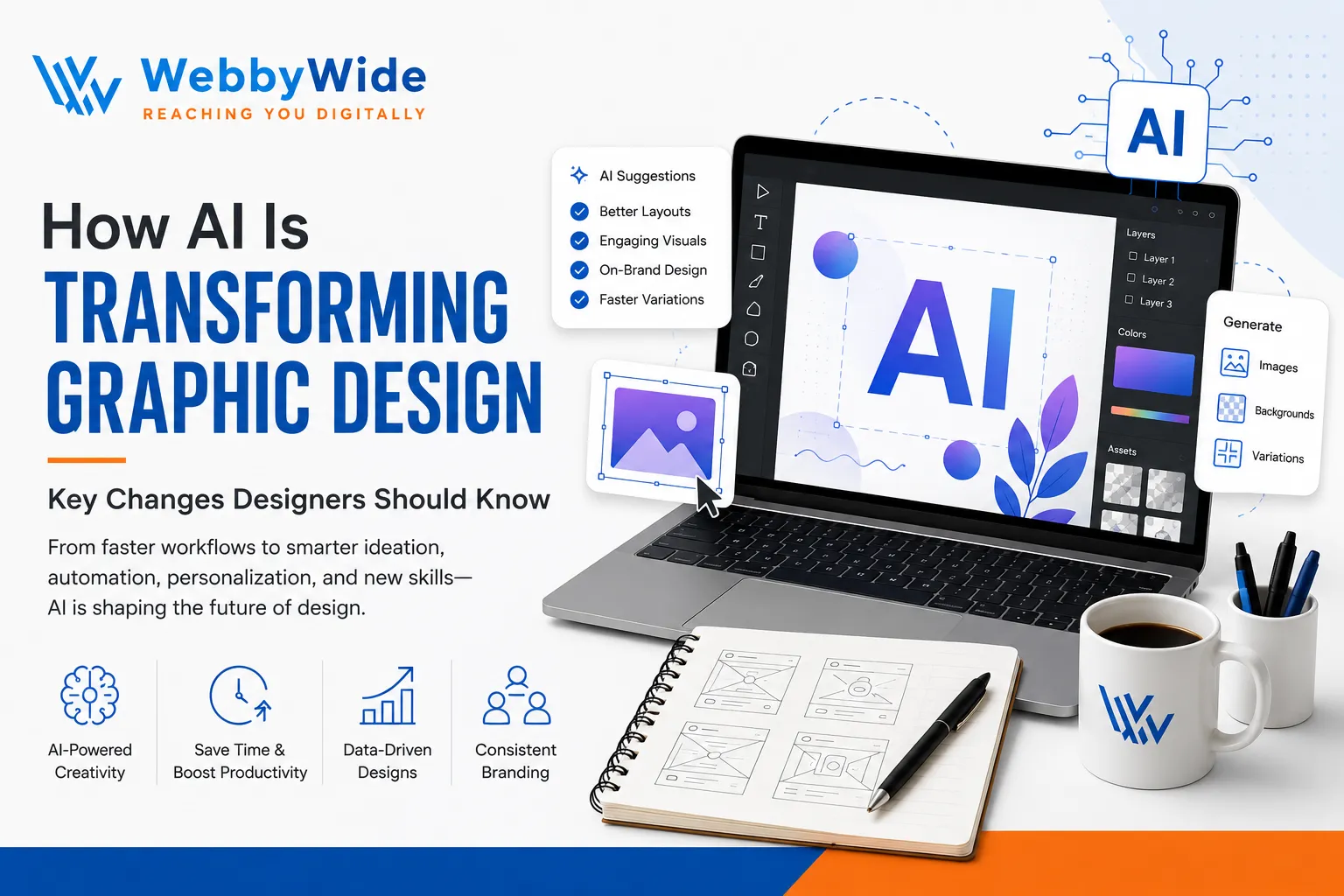
AI is now changing the way designers approach that detail. As I explore how AI is transforming graphic design, one pattern keeps appearing: designers are using artificial intelligence to accelerate repetitive creative tasks while keeping human judgment at the center.
1. AI Speeds Up the First Design Concepts
Traditionally, I might begin a letterhead project by reviewing a company's logo, colors, typography, audience, industry, and existing brand guidelines. Then comes the sketching, experimentation, revisions, and occasional moment of staring at a blank screen while pretending inspiration is definitely coming.
AI changes that process.
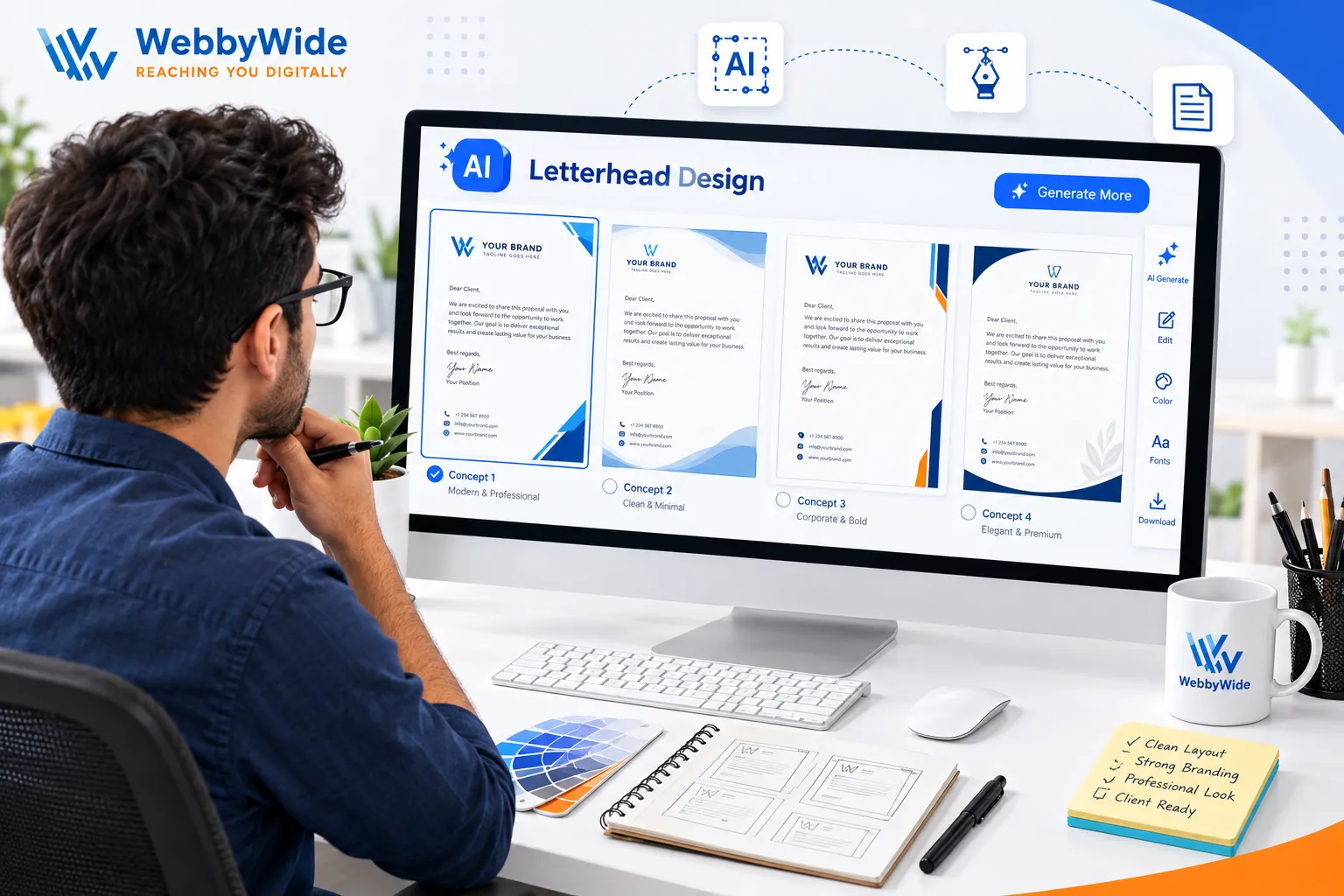
Modern design systems can help generate multiple layout directions based on a brand's visual characteristics. Instead of spending hours developing one concept, designers can quickly explore several possibilities.
For example, I might test:
- Minimal corporate layouts
- Editorial-inspired designs
- Bold modern stationery
- Luxury-style letterheads
- Traditional professional layouts
- Creative layouts for startups
- Industry-specific business stationery
The designer still decides what works. AI simply makes the exploration phase faster.
That speed makes Letterhead Design Services more flexible, especially for businesses that want several concepts before choosing a final direction.
2. AI Helps Create More Consistent Brand Systems
A letterhead should not feel like a random piece of stationery.
It should belong to the same visual family as the company's website, business cards, presentations, social media graphics, packaging, and other branded materials.
This is where AI can become especially useful.
I can feed established brand elements into a design workflow and use AI-assisted tools to explore combinations of typography, spacing, colors, imagery, and layout structures. The technology can help identify patterns and maintain visual consistency while I make the final creative decisions.
For businesses, this creates a more connected brand experience.
Imagine opening a proposal and immediately recognizing the company because the typography, colors, logo placement, spacing, and overall aesthetic match everything else you have seen from that brand.
That consistency feels intentional.
And intentional design usually feels more professional than design assembled at the last minute.
3. AI Makes Personalization Easier
One of the biggest opportunities I see in modern Letterhead Design Services is personalization.
A national company might need one core letterhead system with variations for different departments, locations, services, or audiences.
AI can help designers develop these variations more efficiently.
For example, a company could maintain a consistent master design while creating versions for:
- Sales teams
- Human resources
- Legal departments
- Regional offices
- Executive communications
- Client proposals
- Internal documents
The goal isn't to create twelve completely different designs.
The goal is to create one recognizable identity that adapts intelligently.
That distinction matters. Good branding gives you flexibility without sacrificing recognition.
4. AI Helps Designers Explore Typography
Typography can make or break a letterhead.
A typeface can make a company appear traditional, modern, luxurious, friendly, technical, or completely forgettable.
AI-assisted design tools can help designers experiment with font combinations and hierarchy much faster. I can compare different approaches to headlines, company names, addresses, phone numbers, website URLs, and supporting information without manually rebuilding every variation from scratch.
Still, I would never let AI make the final typography decision on its own.
A font may technically fit a layout while completely missing the brand's personality.
That is where human experience matters.
AI can suggest. I decide.
5. AI Supports Better Layout Experiments
White space is one of those design elements people notice without realizing they notice it.
Too little space makes a letterhead feel cramped. Too much can make it look unfinished. Poor alignment can make even an expensive brand appear amateur.
AI-assisted design workflows can help designers test different arrangements quickly.
For example, I might compare:
|
Layout approach |
Visual impression |
Common business use |
|
Minimal |
Clean and modern |
Technology companies |
|
Structured |
Formal and organized |
Professional services |
|
Editorial |
Stylish and distinctive |
Creative businesses |
|
Luxury |
Refined and premium |
High-end brands |
|
Bold |
Energetic and memorable |
Startups and agencies |
This makes Letterhead Design Services more experimental without making the entire process slower.
6. AI Can Connect Letterhead With the Rest of Your Branding
I don't think letterhead should exist in isolation.
If your company has invested in a memorable logo, the stationery should support it. If your website has a sophisticated visual identity, your printed documents should feel like they came from the same brand universe.
That's why I see professional logo design as an important part of the broader identity system. A strong logo gives designers a visual foundation from which they can build stationery, business cards, presentations, packaging, and digital assets.
AI can help explore those connections, but I still need to understand the brand itself.
The technology can recognize patterns. It doesn't automatically understand why your customers should trust you.
7. AI Tools Give Designers More Creative Options
The AI landscape has exploded, and designers now have access to tools that can support brainstorming, image creation, layout exploration, typography experiments, editing, and other parts of the creative workflow. Platforms such as Adobe Firefly also demonstrate how generative AI is becoming part of everyday creative work, from generating visual concepts to experimenting with design elements.
I don't see these tools as a replacement for design expertise. I see them more like an extremely fast creative assistant.
For designers interested in exploring the technology, this guide to AI tools for graphic designers offers another useful look at how artificial intelligence is entering everyday creative workflows.
The important thing is knowing when to use AI and when to step away from it.
Sometimes the best design decision is the one that comes from experience rather than an algorithm.
8. AI Can Make Revisions Faster
Every designer knows that revisions are part of the job.
A client may love the concept but ask for a different font. Then they want the logo slightly smaller. Then the address moves. Then someone from management says, “Can we make it feel more premium?”
Suddenly, one small revision becomes an afternoon.
AI-assisted workflows can reduce some of that friction.
Designers can experiment with alternative spacing, hierarchy, imagery, and visual arrangements more quickly. That can make the revision process more productive while allowing designers to spend more time on meaningful creative decisions.
For clients, this can translate into a smoother design experience.
For designers, it can mean fewer hours spent on repetitive adjustments.
9. AI Helps Small Businesses Look More Established
Small businesses often face an interesting challenge.
They need professional branding, but they may not have the design resources of a large corporation.
Modern Letterhead Design Services can help close that visual gap.
A local consulting company, startup, law firm, real estate business, healthcare practice, or creative agency can develop professional stationery that feels intentional and credible.
AI can reduce some of the time required to explore ideas, while a skilled designer ensures the final result feels appropriate for the business.
That combination can be particularly useful for growing American businesses trying to establish a strong first impression.
What AI Still Cannot Replace
Here's where I think the conversation needs some honesty.
AI is powerful, but it doesn't automatically understand your business.
It doesn't sit in your sales meetings. It doesn't talk to your customers. It doesn't know that your brand needs to feel sophisticated but approachable, traditional but not outdated, or innovative without looking like every other startup in Silicon Valley.
That requires human interpretation.
A designer needs to understand:
- Your brand personality
- Your target audience
- Your industry
- Your existing identity
- Your communication style
- Your practical document requirements
- How the design will work in print and digital formats
That is why the future of Letterhead Design Services isn't simply “AI versus designers.”
It is AI with designers.
The Future of Letterhead Design Services
I expect Letterhead Design Services to become increasingly personalized, efficient, and connected to broader brand systems.
Instead of designing one static page and calling it finished, businesses may increasingly build flexible stationery systems that work across printed letters, PDFs, proposals, invoices, contracts, and digital documents.
AI will likely help designers explore these systems faster.
But I don't think the best results will come from pressing a button and accepting whatever appears.
The strongest designs will still come from people who understand branding, typography, composition, audience psychology, and business communication.
AI can generate possibilities.
Human designers give those possibilities meaning.
Conclusion
AI is changing Letterhead Design Services, but I don't think it is making professional design less important. If anything, it is raising the bar.
Designers can explore more concepts, test ideas faster, personalize brand systems, and reduce repetitive work. At the same time, businesses can create stationery that feels more polished, consistent, and relevant to modern customers.
The smartest approach is simple: use AI for speed and exploration, then use human creativity for strategy, judgment, and personality.
If your business needs stationery that looks like a genuine extension of your brand rather than another generic template, get in touch with our design team and start building a more distinctive visual identity.
Frequently Asked Questions
AI helps designers generate concepts, test layouts, explore typography, personalize variations, and speed up repetitive design tasks. Human designers still guide the creative direction and final decisions. AI can help create concepts and visual directions, but I recommend using professional design expertise for the final result. A business letterhead needs to reflect your brand accurately and work properly across real documents. They can be, but uniqueness depends heavily on the creative process. If someone relies on generic prompts and templates, the result may look familiar. A skilled designer can use AI as a starting point and develop a more distinctive identity. Yes, AI-assisted workflows can help designers work with established colors, typography, logos, and visual patterns. However, human review remains important to ensure the final letterhead actually feels consistent with the brand. Yes. Businesses still use letterheads for proposals, contracts, official correspondence, invoices, reports, and other professional documents. A well-designed letterhead can strengthen brand consistency and credibility. It depends on your needs. A basic internal document may work with a template, while a customer-facing brand system usually benefits from professional design expertise. I would consider how important the document is to your overall brand before making the choice.How AI Is Transforming Letterhead Design Services

Comments
Add Comments
Update Comment