
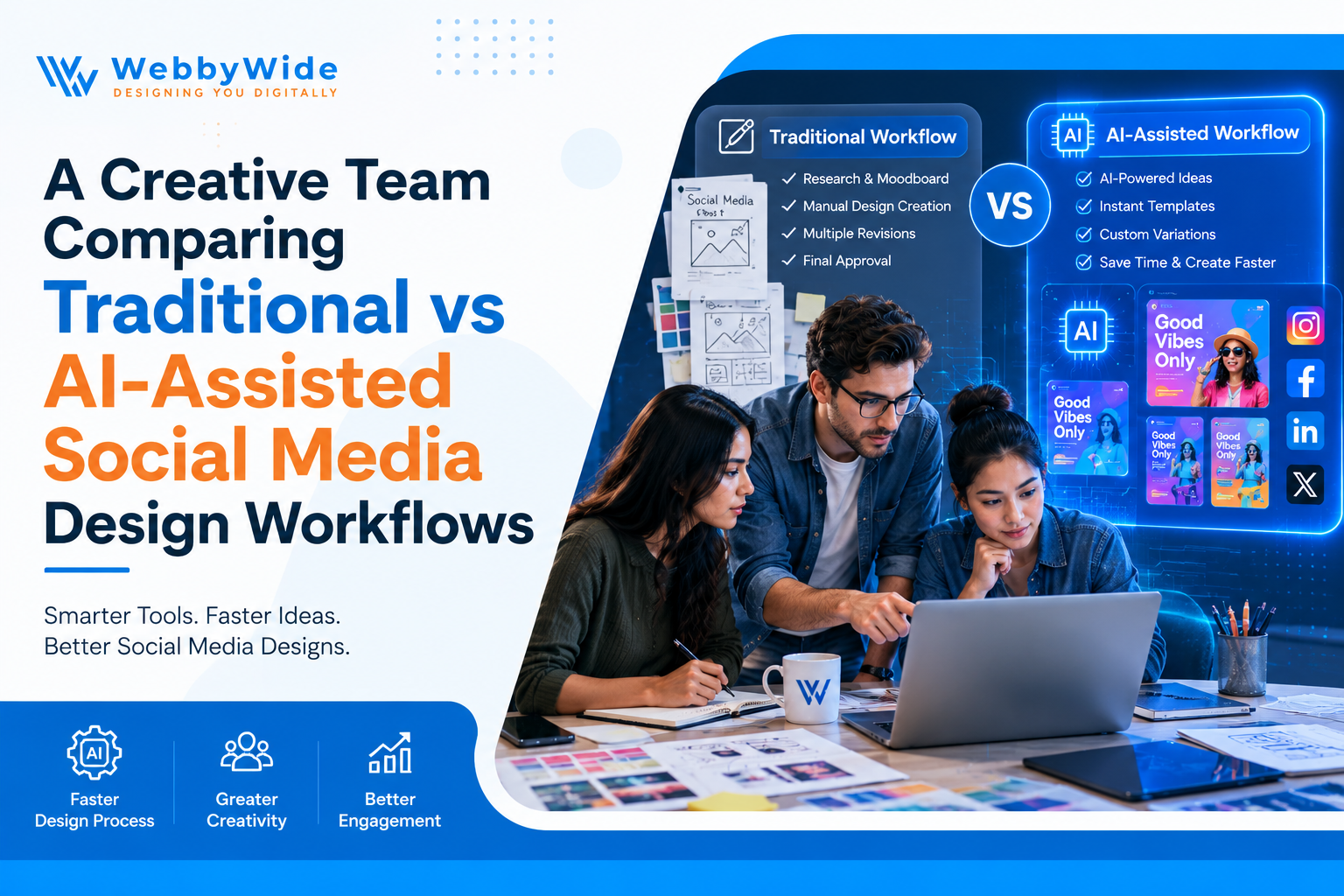
How AI Is Changing Social Media Design Services for Growing Brands
How AI Is Changing Social Media Design Services for Growing Brands
Social media moves at a ridiculous pace. One minute, a brand-new trend dominates your Instagram feed; the next, everyone has moved on to something else. For growing businesses, keeping up means creating fresh visuals without sacrificing quality, consistency, or a decent night’s sleep. That’s where artificial intelligence is changing the game.
I see AI as more than a shortcut for making pretty pictures. It’s changing how brands plan campaigns, develop visual identities, and connect with customers. Today, Social Media Design Services can combine creative thinking with AI-powered tools to help businesses produce better content, test new ideas, and stay recognizable in a crowded digital world.
If you want your brand to look polished across Instagram, Facebook, LinkedIn, and TikTok, explore our Social Media Design Services. You can also learn more about how AI is transforming graphic design to understand how these changes extend beyond social media.
1. Why AI Is Becoming a Big Deal in Social Media Design
Growing brands often face an awkward problem. They need the visual presence of an established company, but they don't always have an in-house creative department, a full-time photographer, or a marketing budget that stretches to the moon.
Traditionally, producing a steady stream of branded graphics meant juggling designers, revisions, resizing, and approvals. AI can simplify parts of that process. A team can generate initial concepts, explore different layouts, adapt copy for specific platforms, and prepare creative variations without starting from scratch every time.
That doesn't mean AI suddenly understands your customers better than you do. It means you can spend less time on repetitive production and more time deciding what your brand should actually say.
For businesses investing in Social Media Design Services, that shift can make a meaningful difference. Instead of treating every post as a separate project, you can build a visual system that supports your marketing goals over time.
2. Faster Content Creation Without the Copy-and-Paste Look
Consistency matters on social media, but consistency doesn't mean publishing the same graphic in six different colors and calling it a campaign.
AI-powered design tools can help teams generate layout ideas, suggest color combinations, remove backgrounds, resize images, and create variations for different platforms. A single campaign concept can become a LinkedIn graphic, an Instagram carousel, a Facebook promotion, and a set of supporting Stories.
The real advantage is speed. Your designer can explore more directions before settling on one, while your marketing team can prepare content calendars with fewer production bottlenecks.
However, faster doesn't automatically mean better. AI-generated visuals can look generic when businesses accept the first result without making thoughtful adjustments. Stock-looking imagery, awkward text placement, and inconsistent brand colors can make a company appear less credible.
That's why effective Social Media Design Services still need a human creative eye. I would use AI to accelerate the early stages, then refine the work around the brand's personality, audience, and campaign objective.
The goal isn't to publish more just for the sake of it. It's to create stronger content without making your team work around the clock.
3. Personalization Is Becoming More Practical
People don't scroll social media looking for advertisements. They scroll for entertainment, useful information, conversations, and ideas that reflect their interests.
AI gives brands more ways to tailor their visuals to different audiences. A fitness company, for example, might create one campaign for beginners who want simple workout routines and another for experienced athletes interested in performance. The central message can remain consistent while the imagery, format, and supporting copy change.
A software company could take a similar approach. Its LinkedIn graphics might focus on productivity and business outcomes, while its Instagram content highlights quick tips, product features, or behind-the-scenes moments.
This is where Social Media Design Services become more strategic than simply making attractive graphics. The design needs to support a specific message for a specific audience.
According to Pew Research Center's social media fact sheet, Americans use a range of social platforms, and usage patterns differ across demographic groups. That variety gives brands a practical reason to consider where their audiences spend time and how those people prefer to consume content.
Personalization still requires good judgment. I wouldn't create a dozen versions of a post just because a tool makes it easy. I'd start with meaningful audience differences, test a few creative approaches, and keep the versions that serve a clear purpose.
4. AI Is Helping Brands Build a More Consistent Visual Identity
Imagine walking into your favorite coffee shop. The menu, packaging, signage, and cups all feel like they belong to the same place. You recognize the brand before you even read the name.
Social media should create that same sense of familiarity.
Growing businesses often struggle with consistency because multiple people create content, campaigns change quickly, and different platforms demand different dimensions. One post might use a bold typeface, another might feature unrelated colors, and a third might look as though it belongs to a completely different company.
AI can help teams organize design systems, explore approved templates, and adapt established layouts for different content formats. Designers can use those systems to maintain recognizable colors, typography, image treatments, and spacing across campaigns.
For businesses investing in Social Media Design Services, the key is to establish the visual rules first. AI should follow your brand guidelines rather than invent a new identity every Tuesday.
A strong system might include:
- A defined color palette and typography hierarchy.
- Reusable layouts for announcements, promotions, and educational posts.
- Consistent image treatments and illustration styles.
- Templates for platform-specific formats.
- Clear rules for logo placement and visual spacing.
I also recommend reviewing AI-generated assets before publishing them. Tools can introduce inconsistent details, distort brand elements, or produce visuals that don't match your established style.
A recognizable brand doesn't need every post to look identical. It needs each post to feel like part of the same story.
5. The Best AI Tools Still Need Creative Direction
The AI design market keeps growing, and businesses have more options than ever. Some tools focus on image generation, others help with templates and editing, while some support collaborative design workflows.
Here are a few popular options worth exploring.
|
Tool |
What it can help with |
Best use case |
|
Canva Magic Studio |
AI-assisted layouts, image editing, and content creation |
Small teams producing regular social posts |
|
Adobe Firefly |
Generative image creation and editing |
Creative concepts and polished visual assets |
|
Adobe Express |
Social graphics, templates, and quick content production |
Businesses creating platform-ready designs |
|
Figma |
Collaborative design and reusable components, with AI features depending on the workflow |
Teams managing structured design systems |
|
ChatGPT |
Brainstorming campaign concepts, visual directions, and creative briefs |
Planning and developing design ideas |
Features, pricing, and usage rights vary, so check each provider's current terms before choosing a tool.
If you're comparing options, our guide to AI tools for graphic designers offers another starting point.
My advice? Don't choose a tool because everyone on LinkedIn seems obsessed with it. Choose one that solves a real production problem.
For example, if your team spends hours resizing graphics, prioritize a workflow that makes adaptation easier. If creative ideas are the bottleneck, focus on tools that help you explore concepts. And if collaboration causes endless confusion, look for a platform that simplifies reviews and approvals.
The right technology should fit your workflow, not force your entire team to rebuild it.
6. Better Testing Can Lead to Smarter Design Decisions
Design has always involved a little guesswork. You might love a particular headline or color combination, but your audience may respond differently.
AI can make creative testing easier by helping teams prepare multiple versions of a design. You could test a product-focused image against a lifestyle photograph, compare two headline treatments, or try different layouts for an educational carousel.
Then you can evaluate performance using metrics that match the campaign's purpose.
|
Campaign goal |
Useful metrics |
What to investigate |
|
Brand awareness |
Reach and impressions |
Which creative reaches more people? |
|
Engagement |
Shares, saves, and meaningful comments |
Which design encourages interaction? |
|
Website traffic |
Link clicks and click-through rate |
Which visual gives people a reason to visit? |
|
Lead generation |
Qualified leads and conversion rate |
Which campaign attracts potential customers? |
|
Community growth |
Relevant profile visits and follows |
Which content makes people want to learn more? |
AI can support the creative process, but your analytics should determine what works. A beautiful graphic isn't necessarily an effective marketing asset, and a post with plenty of likes won't always generate qualified leads.
This is another reason to approach Social Media Design Services as part of a wider marketing strategy. Good design captures attention, but the right message, audience, and offer help turn that attention into action.
Start with one variable at a time when possible. If you change the headline, imagery, audience, and offer simultaneously, you'll struggle to identify what caused the result.
7. Human Creativity Still Makes the Difference
Let's address the obvious question: if AI can generate designs in seconds, why would a growing brand still need a designer?
Because producing an image and developing a compelling visual idea are two different jobs.
AI can suggest layouts, generate imagery, and accelerate repetitive tasks. However, a designer must still decide whether the concept feels appropriate, whether the message is clear, and whether the result reflects the brand's values.
Consider a local American business preparing a Fourth of July campaign. A generic AI-generated graphic might include fireworks, stars, and a flag-inspired color scheme. It may look perfectly acceptable, but it could also resemble thousands of other holiday promotions.
A thoughtful designer might take a different approach. For a neighborhood coffee shop, the campaign could feature a summer drink, a playful community message, and a recognizable illustration style that customers already associate with the business.
The difference comes from context, taste, and a clear understanding of the audience.
Effective Social Media Design Services combine technology with creative judgment. Designers can challenge generic ideas, catch visual inconsistencies, and develop concepts that feel specific to the business rather than pulled from an endless digital template library.
I also believe human review matters when a campaign touches sensitive subjects, cultural events, or public conversations. An automated image may miss a detail that changes the entire meaning of a post.
Use AI to expand your creative options, not to eliminate the person responsible for making the final call.
8. What Growing Brands Should Watch Out For
AI can save time, but careless use can create expensive problems. Before you build your entire content strategy around it, consider a few important risks.
Copyright and licensing: Check the terms governing generated images, stock assets, fonts, and other design elements. Don't assume every output is automatically safe for commercial use.
Brand originality: If you rely entirely on default prompts and templates, your content may look similar to that of competing businesses. Add brand-specific direction and meaningful creative choices.
Accuracy: AI-generated images can contain distorted products, strange hands, incorrect details, or misleading visual information. Inspect every asset before publication.
Privacy: Avoid uploading confidential customer information, unreleased campaigns, or sensitive business materials into tools without reviewing their data-handling policies.
Accessibility: Check color contrast, readable type sizes, and meaningful alt text. A graphic that looks excellent on a large monitor may be difficult to read on a phone.
Human oversight: Establish an approval process for public-facing content, especially when it involves regulated industries, sensitive topics, or factual claims.
These precautions don't make AI less useful. They help you use it responsibly while protecting the brand you've worked hard to build.
9. How to Get More Value From AI-Powered Design Services
You don't need a massive marketing department to start. A clear process can help even a small business make better use of AI.
I recommend starting with these five steps:
- Define your brand identity. Document your colors, fonts, tone, audience, and visual preferences before generating assets.
- Identify repetitive tasks. Look for bottlenecks such as resizing graphics, developing initial concepts, or preparing recurring content.
- Choose tools that solve those problems. Avoid paying for overlapping features your team rarely uses.
- Create a repeatable workflow. Combine AI-assisted production with designer review, brand checks, and a clear approval process.
- Measure the results. Track production time, engagement, clicks, leads, and other outcomes that matter to your business.
When you evaluate Social Media Design Services, ask how the team balances AI with original creative work. Find out how it maintains brand consistency, checks visual quality, handles revisions, and measures campaign performance.
Also, consider the wider identity of your business. Consistent social graphics work best when they support a recognizable brand, including your website, marketing materials, and professional logo design.
The best workflow isn't necessarily the one that produces the most graphics. It's the one that helps you communicate clearly, maintain quality, and spend your creative budget wisely.
Conclusion
AI is changing how growing brands approach social media, from faster content production to more flexible design systems and smarter creative testing. But technology alone won't make your business memorable.
The brands that stand out will combine efficient tools with original ideas, consistent visuals, and a clear understanding of their audiences. That's the real opportunity behind modern Social Media Design Services: creating content that looks good, communicates something meaningful, and supports measurable business goals.
You don't need to chase every new AI trend. You need a practical design strategy that helps your brand show up consistently and make a stronger impression wherever your customers spend time.
Ready to give your brand a more polished, consistent social media presence? Get in touch with our design team to discuss your goals and explore a creative approach that fits your business.
Your next great campaign might start with AI. The idea that makes people remember it should still be yours.
Frequently Asked Questions
AI helps designers develop concepts, generate image variations, resize graphics, and organize content workflows more efficiently. Human designers still guide creative direction, maintain brand consistency, and review the final work. Absolutely. Small businesses can use AI-assisted tools to explore campaign ideas, create reusable templates, and produce platform-specific graphics. They should still invest time in brand guidelines and quality control to avoid generic results. AI will automate some repetitive design tasks, but it won't remove the need for creative judgment, audience understanding, and brand strategy. Designers who learn to use AI effectively can focus more attention on concepts, storytelling, and visual quality. Canva Magic Studio, Adobe Firefly, and Adobe Express are useful options for different design needs. Figma can support collaborative design systems, while ChatGPT can help with brainstorming and creative briefs. The best choice depends on your workflow, budget, and requirements. Start with documented brand guidelines, approved colors, typography, templates, and logo rules. Review every generated asset against those standards before publishing, and keep a human approval process in place. How AI Is Changing Social Media Design Services

Comments
Add Comments
Update Comment