
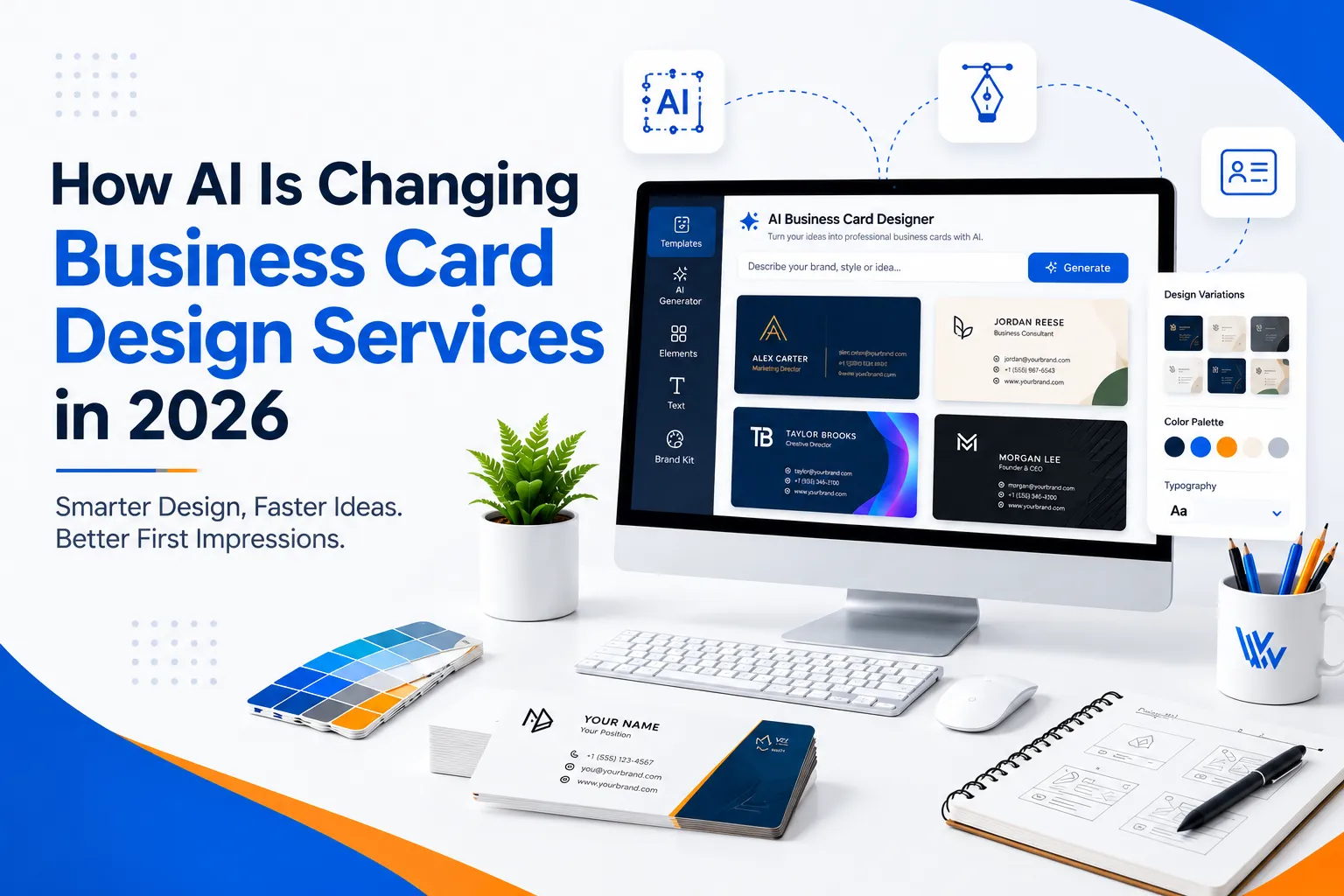
How AI Is Changing Business Card Design Services in 2026
Walk into any networking event in New York, Los Angeles, Chicago, or Austin and you’ll notice something interesting: people still exchange business cards. Yes, even in an era of LinkedIn QR codes and “just Google me” introductions. A well-designed card still creates a tiny physical moment in a very digital world. In 2026, however, artificial intelligence has started changing how designers create that moment.
I’ve watched business card design move from a relatively straightforward exercise in fonts, colors, logos, and layouts into something far more strategic. AI can now help generate concepts, explore visual directions, suggest typography, create variations, and speed up repetitive design work. But here’s the important part: AI doesn’t automatically create a great business card. It gives talented designers a much faster and broader creative playground.
For businesses that want to make a memorable first impression, modern Business Card Design Services now combine human creativity with intelligent technology. You can explore professionally developed concepts through Business Card Design Services while still getting the strategic thinking that a generic AI prompt simply cannot provide.
Why AI Matters in Business Card Design in 2026
A business card may measure only a few inches, but it carries a surprising amount of information. Your name, title, company, contact details, logo, website, social profiles, and visual identity all need to coexist without turning the card into a tiny billboard.
That challenge explains why Business Card Design Services have become increasingly valuable as AI enters the workflow. Designers can use AI to generate multiple creative directions quickly, compare visual styles, and refine concepts before spending significant time on production.
I like to think of AI as the extremely enthusiastic creative intern who never sleeps. Give it a direction, and it can produce dozens of ideas. Ask it to understand your audience, positioning, brand personality, printing limitations, and long-term identity, however, and you still want an experienced human at the wheel.
AI has already changed broader creative workflows, from brainstorming to image generation and layout experimentation. If you want a wider look at the subject, this guide on how AI is transforming graphic design offers useful context for understanding where business card design fits into the bigger picture.
1. AI Makes the First Design Stage Much Faster
Traditionally, designers might develop a handful of initial business card concepts before presenting them to a client. AI can dramatically expand that first stage.
A designer can now experiment with:
- Minimalist layouts
- Bold typography
- Luxury-inspired designs
- Geometric compositions
- Editorial-style cards
- Color variations
- Different information hierarchies
- Industry-specific visual styles
This doesn’t mean designers should simply generate 50 random cards and call it a day. Instead, AI helps designers investigate possibilities faster.
For Business Card Design Services, that speed can shorten the distance between an initial idea and a polished concept. A designer can test several creative directions, identify the strongest approach, and then spend more time refining the details that actually matter.
That extra time matters because great design often hides in the tiny decisions: the spacing around a phone number, the weight of a typeface, the position of a logo, or the amount of breathing room around a QR code.
2. Personalization Becomes More Sophisticated
One of the biggest changes AI brings to Business Card Design Services involves personalization.
Imagine a financial advisor who wants a card that feels trustworthy and sophisticated. Now compare that with a creative director who wants something expressive and unexpected. A dentist, real estate agent, software founder, and fashion consultant all need different visual personalities.
AI can help designers explore these differences quickly.
Instead of relying on one generic template, designers can develop concepts around:
- Industry expectations
- Target audience
- Brand personality
- Professional position
- Customer demographics
- Preferred visual style
- Digital and print requirements
The designer still makes the final decisions, but AI helps uncover more possibilities.
That approach also supports the broader movement toward personalized branding. In 2026, people increasingly expect businesses to look distinctive rather than interchangeable. Your business card shouldn’t look like it came free with a printer.
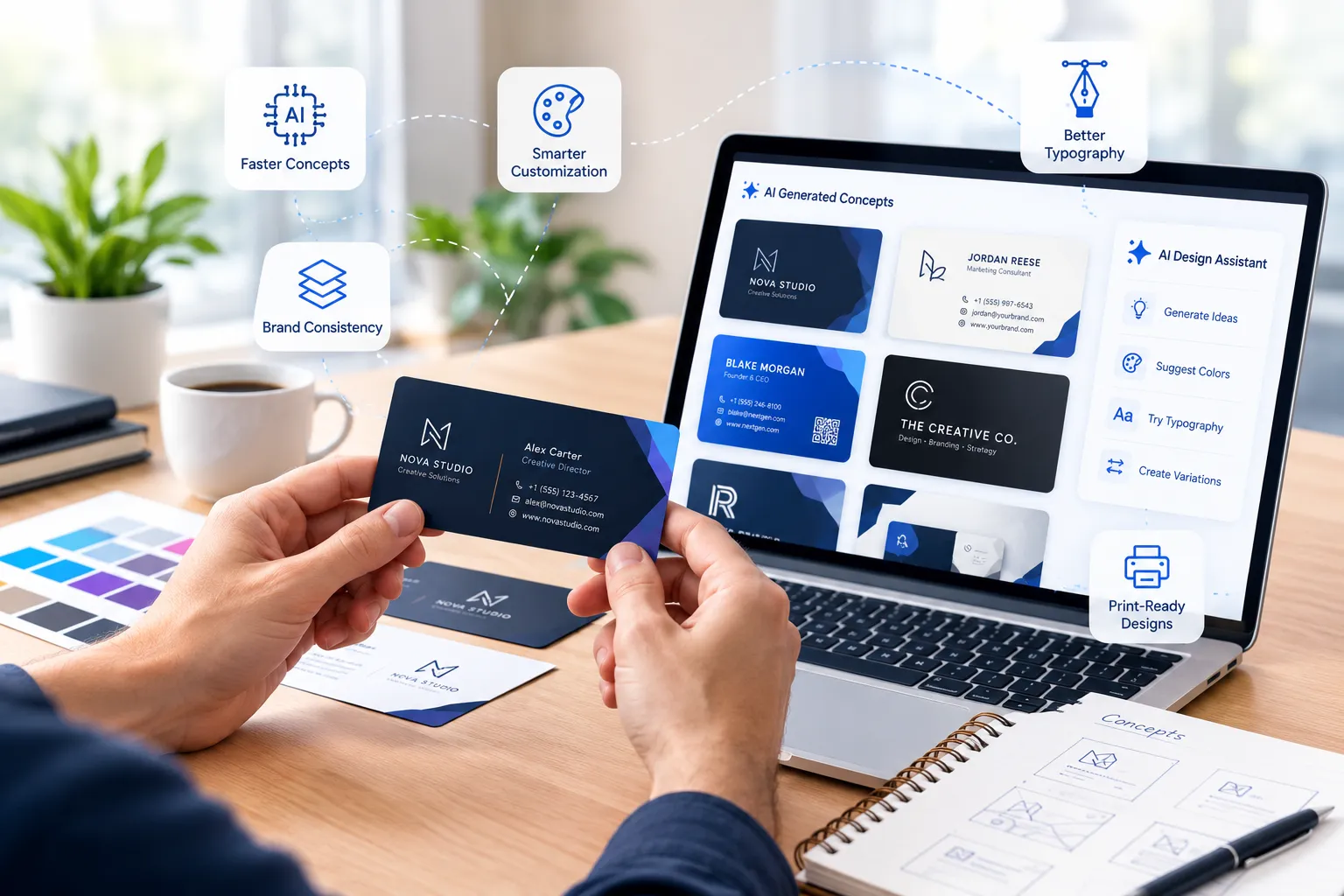
3. AI Helps Designers Explore Trends Without Chasing Every Trend
Design trends move quickly. One month, minimalism dominates. The next, designers embrace oversized typography, metallic finishes, tactile textures, retro aesthetics, or unconventional layouts.
AI gives designers a fast way to explore these visual movements.
For example, a designer working on Business Card Design Services can investigate how a brand might look through a modern editorial lens, a premium luxury aesthetic, or a bold technology-inspired direction.
However, I would never recommend following a trend simply because everyone else does.
A business card should still feel relevant several years from now. AI can identify what looks fashionable today, but experienced designers need to ask a more important question: Will this still represent the business tomorrow?
4. AI Supports Better Design Workflows
AI doesn’t only influence the final appearance of a business card. It can also improve the workflow behind the scenes.
Designers can use modern AI tools for graphic designers to assist with brainstorming, image exploration, content organization, creative variations, and other repetitive tasks.
This creates an interesting shift.
Instead of spending hours performing repetitive work, designers can dedicate more attention to brand strategy and visual refinement. In other words, AI can handle some of the heavy lifting while the designer focuses on making the work actually feel like something.
For Business Card Design Services, that distinction matters. Clients don’t simply pay for pixels arranged inside a rectangle. They pay for judgment, experience, creativity, consistency, and a finished design that represents their business professionally.
5. Typography Gets More Attention
Typography can make or break a business card.
Choose the wrong typeface and a premium brand can suddenly look like it runs a discount coupon website. Choose the right combination, and even a simple card can feel polished.
AI can help designers compare typography combinations and experiment with different visual personalities. Designers can quickly explore serif, sans-serif, condensed, geometric, modern, classic, and expressive type styles.
However, designers still need to check readability manually.
Business cards often contain small text, especially when they include addresses, email addresses, websites, social handles, and QR codes. A typeface might look fantastic on a large monitor and become frustratingly difficult to read when printed.
That’s why professional Business Card Design Services still require human quality control from concept through final artwork.
6. AI Can Strengthen Brand Consistency
Your business card should not exist in isolation.
Ideally, it should feel like a natural extension of your website, logo, social media presence, packaging, presentations, and other brand materials.
For example, if your company already uses a distinctive visual identity, designers can use AI-assisted workflows to explore business card concepts that complement the existing system.
This becomes especially important when you invest in professional logo design. A strong logo establishes a visual foundation, while the business card extends that identity into a physical format.
The goal isn’t to make every branded asset identical. The goal is to make everything feel like it belongs to the same family.
7. AI Helps Create More Design Variations
Here’s where things get genuinely exciting.
Suppose you have a strong business card concept, but you want to test several versions. Maybe you want a dark version, a light version, a premium version, and a more colorful option.
AI-assisted workflows can make those explorations much faster.
Designers can also use guidance from established creative resources such as Adobe’s AI and creative tools to understand how generative technology can support creative experimentation.
Still, more options don’t automatically equal better design.
A designer needs to edit aggressively. Some AI-generated ideas will look clever for five seconds and ridiculous for five years. Good Business Card Design Services separate the interesting concepts from the genuinely useful ones.
8. AI Is Changing How Designers Think About Printing
Digital design represents only half the business card experience.
The finished card needs to survive the real world.
Designers must consider:
- Paper stock
- Ink coverage
- Bleed areas
- Trim lines
- Color accuracy
- Font sizes
- QR code readability
- Embossing
- Foil details
- Spot UV
- Rounded corners
AI can assist during the creative process, but physical production still demands practical knowledge.
For example, an AI-generated concept might look beautiful with extremely fine lines or tiny decorative elements. Those details might disappear during printing.
That’s why experienced Business Card Design Services still include human review before the artwork reaches the printer.
9. AI Makes Creative Testing More Accessible
Small businesses often operate with limited marketing budgets. A startup founder may need to decide whether to spend money on a new website, advertising campaign, packaging, signage, or printed materials.
AI can help designers work more efficiently, which may make sophisticated creative exploration more accessible.
A local consultant, startup founder, realtor, attorney, freelancer, or small agency can potentially explore more visual directions without turning every revision into a major production exercise.
That doesn’t mean AI eliminates professional design costs. Instead, it can help designers use their time more intelligently.
And frankly, that’s a much healthier way to view AI.
10. Human Creativity Still Wins
This might sound contradictory after praising AI for several paragraphs, but it’s actually the most important takeaway.
AI can generate.
AI can remix.
AI can analyze.
AI can accelerate.
But AI doesn’t automatically understand why one business wants to look understated while another wants to look rebellious. It doesn’t automatically understand the founder’s personality, the company’s competitive position, or the subtle emotional response a particular design should create.
Human designers bring those layers into the process.
That’s why the future of Business Card Design Services probably won’t involve humans versus machines. It will involve humans using machines.
Think of it like photography. Digital cameras didn’t eliminate photographers. They gave photographers better tools. AI can create a similar shift in graphic design.
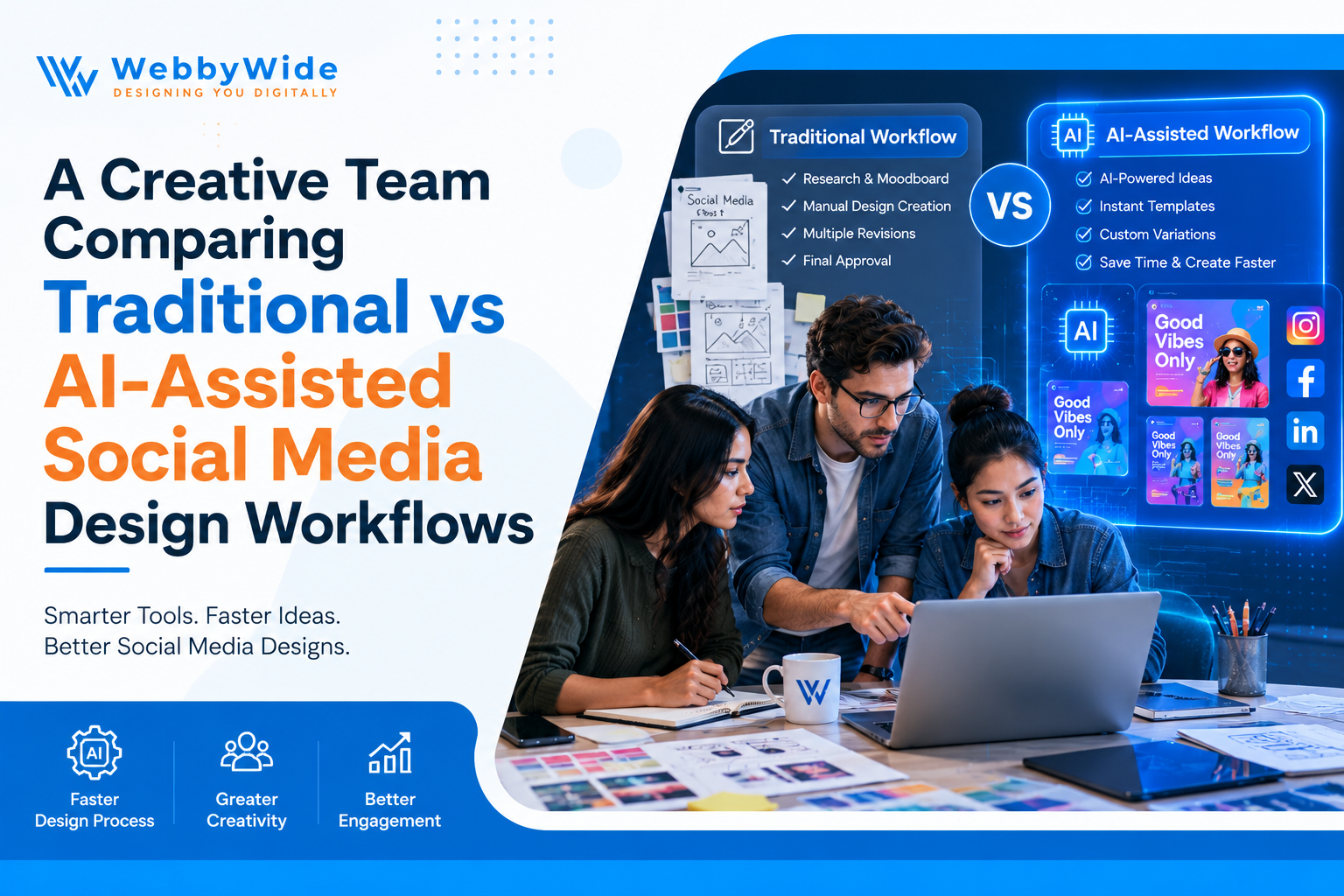
AI Business Card Design vs. Traditional Design
|
Design Factor |
Traditional Workflow |
AI-Assisted Workflow |
|
Initial concepts |
Several concepts |
Many concepts quickly |
|
Creative exploration |
More time-intensive |
Faster experimentation |
|
Personalization |
Designer-led |
Designer + AI-assisted |
|
Revisions |
Often manual |
Faster variations |
|
Brand strategy |
Human-led |
Human-led |
|
Quality control |
Human-led |
Human-led |
|
Printing knowledge |
Essential |
Essential |
|
Final creative judgment |
Designer |
Designer |
The table makes one thing clear: AI changes the process, not the fundamental purpose of design.
What Should You Look for in Business Card Design Services in 2026?
If you’re hiring a designer or agency, don’t ask only whether they use AI.
Ask better questions.
Do they understand branding?
Your card should support your larger identity rather than exist as a standalone decoration.
Do they offer multiple concepts?
You want meaningful creative exploration, not five versions of the same template.
Do they understand print production?
A gorgeous screen design means little if the final printed card looks muddy or unreadable.
Do they balance technology with human creativity?
AI should support the process rather than dictate the result.
Do they think about your audience?
A card for a luxury real estate professional should not feel like a card for a gaming startup.
The strongest Business Card Design Services combine all five.
What Will Business Cards Look Like Next?
I expect business cards to become more interactive without losing their physical character.
QR codes will continue connecting printed cards to digital profiles, portfolios, booking pages, social platforms, and websites. NFC technology may also become more common for professionals who want people to transfer contact information with a simple tap.
Meanwhile, AI will likely make personalization even more advanced.
We may see more cards designed around individual customer segments, professional roles, campaigns, and events. Businesses could create different variations while maintaining a consistent brand system.
Yet I don’t think the classic business card will disappear.
There’s something satisfying about handing someone a beautifully made card after a great conversation. A phone notification disappears. A card can sit on a desk for three months and suddenly remind someone who you are.
That physical memory still has value.
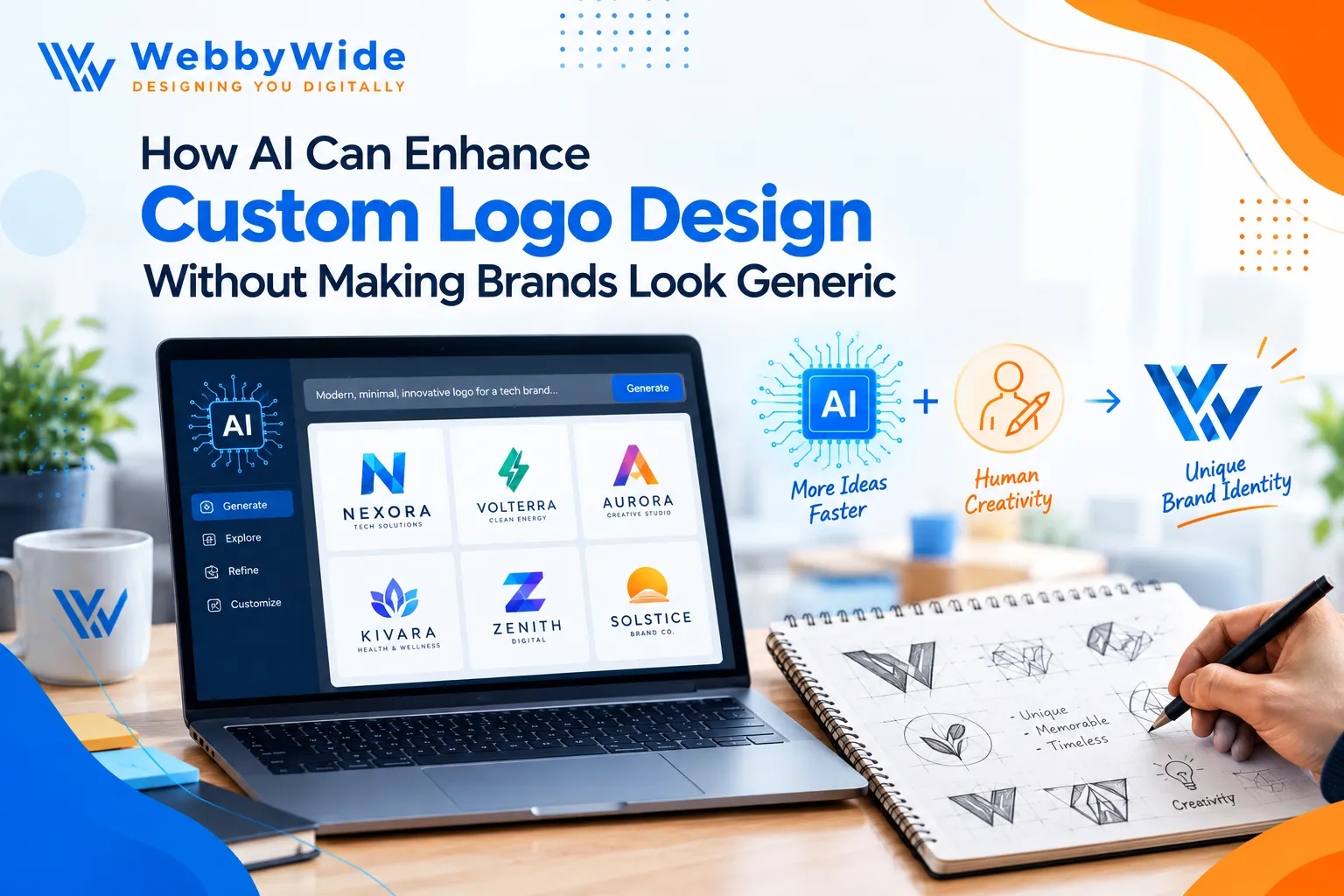
How to Use AI Without Making Your Business Card Look Generic
If you want AI-assisted design without ending up with something that screams “generated by a robot,” follow a simple approach:
- Start with your brand, not the AI tool. Define your personality, audience, and positioning first.
- Use AI for exploration. Generate directions rather than blindly accepting finished concepts.
- Let a professional designer refine the strongest idea.
- Prioritize readability. Your contact information still needs to work.
- Check the design at actual print size.
- Keep your visual identity consistent.
- Avoid unnecessary visual tricks. Clever doesn’t always mean effective.
- Think beyond the card. Make sure the design works alongside your website, logo, social profiles, and other marketing materials.
This approach lets you enjoy the speed of AI without sacrificing the personality that makes a brand memorable.
Conclusion
AI has changed the creative game, and Business Card Design Services sit right in the middle of that transformation. Designers can now explore more ideas, develop variations faster, personalize concepts, and reduce repetitive work. That creates more room for what really matters: thoughtful, strategic, human-centered design.
I see the best future as a collaboration between technology and taste. AI can bring speed and possibilities to the table, but human designers still bring judgment, emotion, storytelling, and restraint. And when those elements work together, a small business card can make a surprisingly big impression.
If you’re ready to give your brand a sharper physical identity and create a card that people actually remember, get in touch with our design team and start exploring what modern design can do for your business.
Frequently Asked Questions
How AI Is Changing Business Card Design Services
They can look professional, but the quality depends heavily on the design process. Professional Business Card Design Services use AI as a creative aid while relying on human expertise for branding, layout, typography, readability, and production.
I don’t think so. AI can automate parts of the design process, but experienced designers still provide strategy, creative judgment, brand understanding, and print-production knowledge.
AI can accelerate brainstorming, generate design variations, explore visual styles, support personalization, and reduce repetitive work. Designers can then spend more time refining the strongest concepts.
Not necessarily. A business card doesn’t need an AI-generated image to benefit from AI. Designers can use AI behind the scenes for ideation and refinement while keeping the final design clean and brand-focused.
Yes. Digital networking continues to grow, but physical business cards still provide a tangible way to reinforce a professional introduction. Many businesses also combine cards with QR codes or other digital connections.
Focus on strong branding, clear typography, thoughtful spacing, memorable visual details, quality printing, and relevance to your audience. You don’t need a complicated design; you need a purposeful one.

Comments
Add Comments
Update Comment