
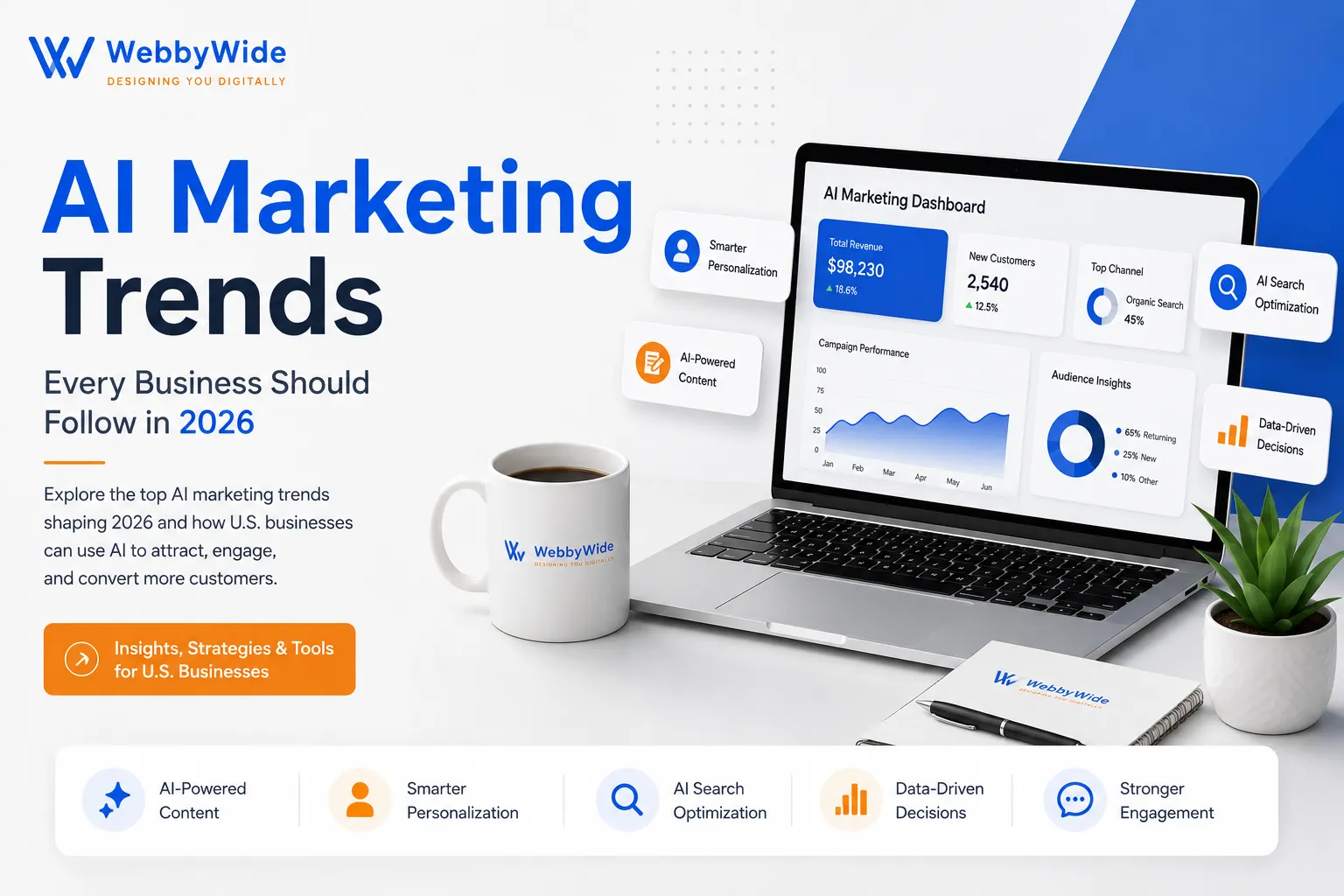
AI Marketing Trends Every Business Should Follow in 2026
In 2026, marketing feels a little like New York traffic: fast, crowded, unpredictable, and somehow still moving. I see brands competing for attention across Google, TikTok, Instagram, YouTube, email, podcasts, and AI-powered search experiences. The businesses winning that attention are not simply throwing more money at advertising. They are finding smarter ways to understand customers, create content, test ideas, and move quickly.
That shift explains why AI Marketing Trends matter so much right now. I no longer see artificial intelligence as a futuristic side project that lives in an innovation department. I see it becoming part of everyday marketing, from campaign planning and audience research to creative production, search visibility, customer support, and performance analysis.
Why AI Marketing Trends Matter in 2026
For creative teams, this shift feels especially dramatic. I regularly see marketers explore AI tools for graphic designers while asking bigger questions about AI and graphic design. At the same time, businesses still need strong visual communication through social media design services and dependable professional graphic design services. AI can speed up the work, but strategy still decides whether the work actually connects.
I think that distinction will define the best AI Marketing Trends of 2026. The goal does not involve replacing every marketer with a robot that writes five thousand blog posts before breakfast. The goal involves giving smart people better tools so they can spend more time thinking, creating, experimenting, and making decisions that actually move the business forward.
What Businesses Should Expect From AI Marketing
I also expect successful marketers to become more selective. The market now contains an endless parade of AI platforms promising instant content, instant leads, instant personalization, and perhaps an instant villa in Miami. I would rather choose a few useful systems that solve real problems than collect subscriptions like refrigerator magnets.
That approach makes the biggest AI Marketing Trends easier to understand. Instead of chasing every shiny feature, I focus on the changes that can improve customer experience, efficiency, visibility, and measurable revenue for an actual U.S. business.
The bigger picture matters, too. Search behavior, paid advertising, creative production, and customer journeys continue to evolve as AI becomes more deeply integrated into digital platforms. I recommend reviewing Google’s latest guidance for marketers using AI alongside your own campaign data so you can separate useful developments from marketing hype.
From here, the most important question becomes simple: Which AI Marketing Trends should your business actually pay attention to in 2026? Let’s break down the developments most likely to shape marketing success over the next year.
1. AI-Powered Search Will Change How Customers Discover Brands
One of the biggest AI Marketing Trends I am watching involves search itself.
People increasingly ask broader, more conversational questions instead of typing short keyword phrases. They want comparisons, recommendations, summaries, alternatives, and answers that feel tailored to their situation.
For a U.S. business, that means traditional SEO cannot operate in isolation. I want content that answers questions clearly, demonstrates expertise, covers related topics naturally, and gives search systems enough context to understand the brand.
I also pay closer attention to:
- Conversational search queries
- Long-form question-based content
- Helpful comparison pages
- First-hand expertise
- Structured information
- Strong brand mentions and authority signals
- Content that answers multiple related questions
The smart move in 2026 does not involve abandoning traditional search. I see it as expanding the strategy so the brand can appear wherever customers look for answers, including AI-enhanced search experiences.
2. Hyper-Personalization Will Become the New Normal
Generic marketing has always struggled to hold attention. In 2026, I expect customers to become even less patient with it.
One of the most practical AI Marketing Trends involves personalization at scale. AI can help marketers analyze customer behavior, identify patterns, segment audiences, and adjust messages based on interests or previous interactions.
Imagine an online retailer showing the same homepage to every visitor. Now compare that with a shopping experience that adjusts recommendations based on browsing behavior, product preferences, previous purchases, and timing.
That difference feels significant.
I would use AI to help personalize:
- Email subject lines and offers
- Product recommendations
- Website experiences
- Ad creative
- Landing page messaging
- Lead nurturing sequences
- Customer retention campaigns
However, I would never sacrifice trust for personalization. Customers should feel understood, not watched through binoculars.
3. AI Agents Will Move Marketing Beyond Simple Automation
Automation completes tasks according to predefined rules. AI agents can potentially handle a more connected series of actions.
That makes agentic marketing one of the most interesting AI Marketing Trends for 2026.
I can imagine an AI-assisted workflow that notices a drop in campaign performance, reviews available data, identifies possible causes, recommends a new audience segment, prepares creative variations, and sends the marketer a clear set of recommendations.
The marketer still makes the important decisions. AI simply removes some of the repetitive work surrounding those decisions.
For small and midsize U.S. businesses, that could become particularly valuable. A lean marketing team can operate with more speed without hiring an entirely new department for every channel.
4. AI Will Transform Content Creation, Not Eliminate Creativity
Content marketing will remain essential, but I think the production process will look very different.
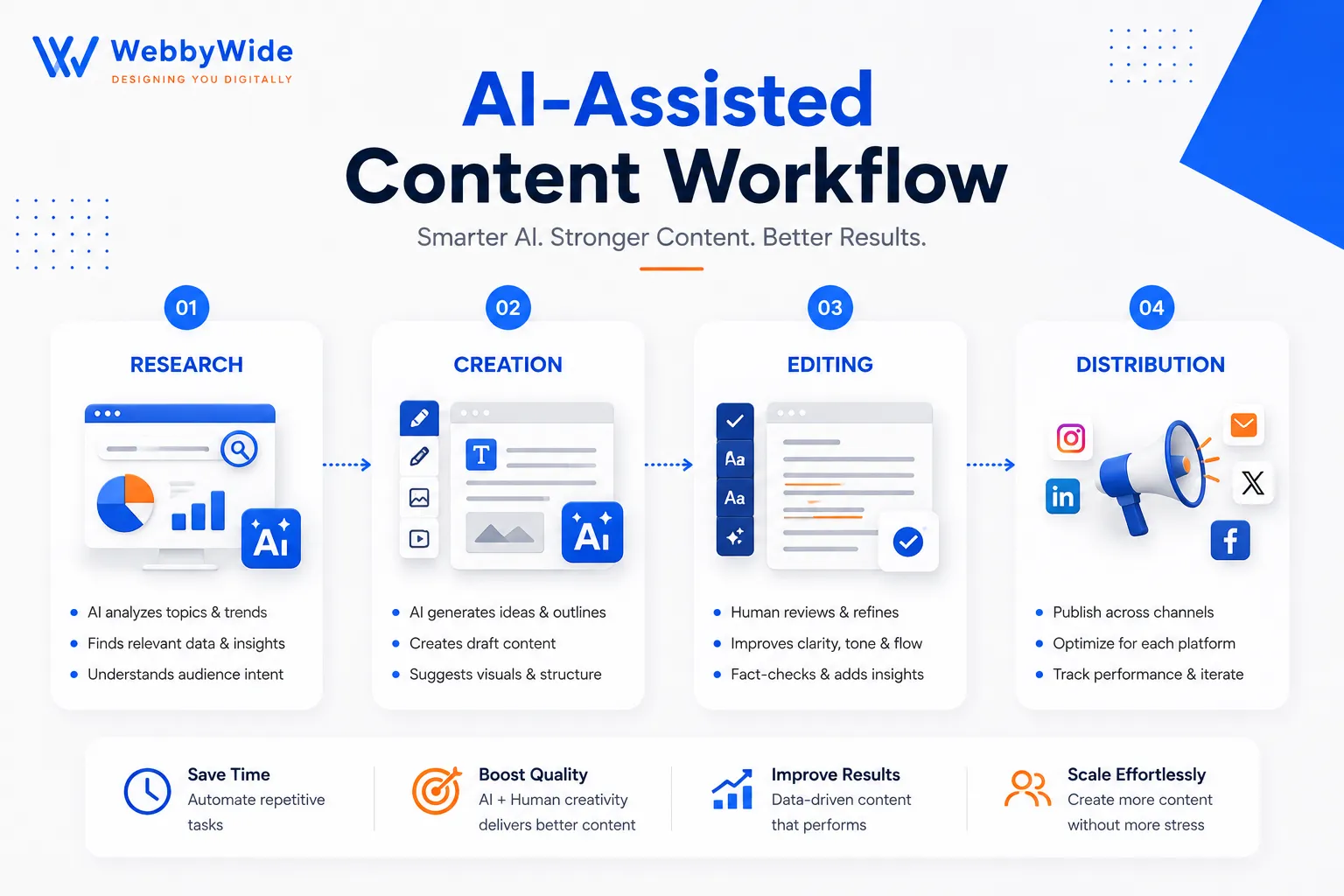
One of the core AI Marketing Trends involves using AI to accelerate research, brainstorming, outlining, editing, repurposing, and content testing.
I might turn one expert interview into:
- A long-form article
- Several social posts
- An email campaign
- Short video concepts
- Sales enablement content
- FAQ material
- Search-focused supporting content
The efficiency gains can be impressive.
Yet I would never publish raw AI output and call the job finished. Readers can recognize generic writing surprisingly quickly. The strongest content still needs opinions, examples, real experience, brand personality, and human judgment.
Think of AI as an extremely energetic assistant. I still want a human sitting in the editor's chair.
5. AI Video and Visual Content Will Explode
If you think visual marketing already moves quickly, 2026 may make it feel like someone attached a rocket to it.
AI-assisted image and video creation represents another major area among AI Marketing Trends, especially for brands that need constant creative variations.
I expect marketers to use AI for:
- Social media concepts
- Ad variations
- Product demonstrations
- Storyboards
- Short-form video ideas
- Thumbnail concepts
- Image variations
- Campaign mockups
This creates a new advantage: speed.
A marketing team can test more creative concepts without rebuilding every asset from scratch. That does not mean every AI-generated image deserves a standing ovation. It simply means marketers can explore more ideas before choosing the strongest one.
6. Predictive Analytics Will Guide Better Marketing Decisions
I have always preferred data over gut feelings, although I admit a good gut feeling occasionally deserves a seat at the table.
Predictive analytics will become another important part of AI Marketing Trends because businesses want to understand what could happen next, not merely what happened last month.
AI can help marketers identify patterns around:
- Customer churn
- Lead quality
- Purchase intent
- Campaign performance
- Audience behavior
- Product demand
- Customer lifetime value
That insight can help teams make smarter budget decisions.
Instead of asking, “Which campaign generated the most clicks?” I would rather ask, “Which campaign attracted the customers most likely to generate long-term value?”
That is a much more useful question.
7. AI Will Make Creative Testing Faster
In the past, I might create a few ad variations, run them, wait, analyze the numbers, and repeat the process.
AI can compress that cycle.
Creative testing now sits firmly among the AI Marketing Trends worth watching because marketers can generate and compare more variations across headlines, visuals, calls to action, formats, and messaging angles.
For example, I could test whether a customer responds better to:
“Save Time on Your Next Project”
versus:
“Finish Your Next Project Faster.”
Small wording differences can create meaningful changes in engagement. AI helps me test more possibilities, but performance data still decides the winner.
8. Voice and Conversational Marketing Will Keep Growing
People increasingly expect brands to answer questions quickly and naturally.
That makes conversational experiences another valuable area within AI Marketing Trends. I expect businesses to improve AI-powered chat, voice experiences, virtual assistants, and customer support systems.
A useful conversational system should help someone find an answer, understand a product, book an appointment, compare options, or reach the right human.
I would avoid building a chatbot simply because every competitor seems to have one. A bad chatbot creates more frustration than a slow contact form ever could.
The best conversational marketing feels helpful rather than robotic.
9. First-Party Data Will Become More Important
Privacy will continue shaping modern marketing, and that makes first-party data increasingly valuable.
Among the most practical AI Marketing Trends, I see businesses becoming more intentional about the information they collect directly through websites, purchases, email subscriptions, customer interactions, and loyalty programs.
When I combine responsible first-party data practices with AI, I can build more relevant audience segments and marketing experiences without relying entirely on third-party signals.
However, I would always prioritize transparency. Customers should understand what information I collect and why I use it.
Trust has become a marketing asset, not just a legal consideration.
10. AI Will Reshape Social Media Marketing
Social platforms reward consistency, speed, creativity, and relevance. That combination makes social media another natural playground for AI Marketing Trends.
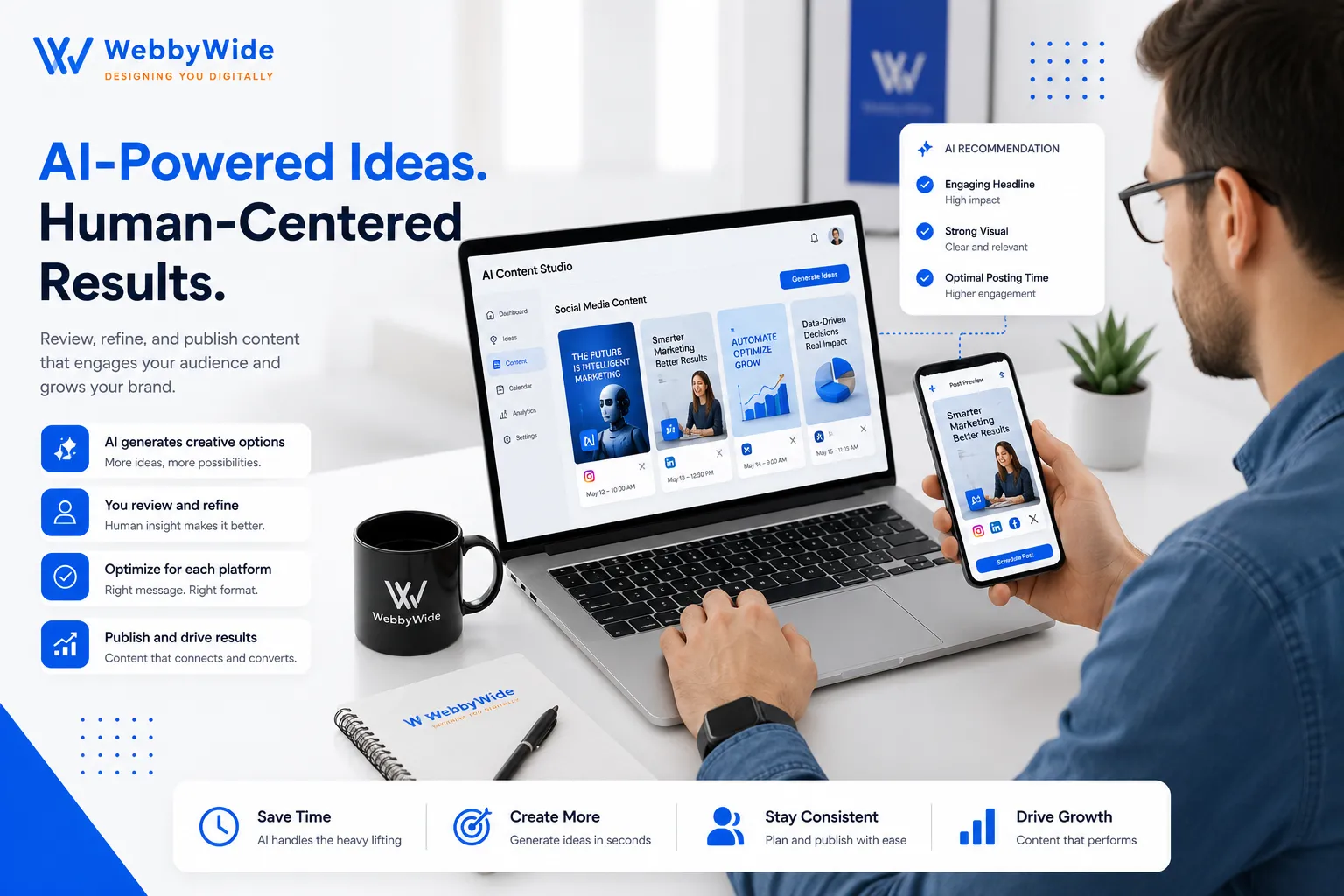
I can use AI to brainstorm content calendars, identify recurring themes, create hooks, repurpose long-form content, and test different messaging styles.
Still, I would not let AI flatten the brand's personality.
A polished social feed means very little when every post sounds like it came from the same robot factory. Strong brands keep a recognizable voice, human stories, humor, opinions, and moments that feel spontaneous.
AI should help me create more consistently while preserving the personality people actually want to follow.
Comparing the Biggest AI Marketing Opportunities
|
Trend |
What It Helps With |
Best Opportunity |
|
AI-powered search |
Discovery and visibility |
SEO and content |
|
Hyper-personalization |
Relevance |
Email and ecommerce |
|
AI agents |
Workflow automation |
Lean marketing teams |
|
AI content creation |
Faster production |
Content marketing |
|
AI video and visuals |
Creative scale |
Social and advertising |
|
Predictive analytics |
Better forecasting |
Budget decisions |
|
Creative testing |
Faster optimization |
Paid media |
|
Conversational AI |
Customer support |
Lead generation |
|
First-party data |
Better targeting |
Retention |
|
AI social marketing |
Consistency |
Brand awareness |
How U.S. Businesses Should Prepare for These AI Marketing Trends
I would not recommend trying everything at once.
Instead, I would start with one business problem.
Ask yourself:
Where do I lose the most time, money, or marketing opportunities right now?
Maybe your team spends hours creating social content. Maybe your sales funnel loses qualified leads. Perhaps your paid campaigns generate traffic but weak conversions. Or maybe your SEO team struggles to create enough useful content.
Start there.
Then I would follow a simple process:
1. Choose one measurable goal.
Define the business result before choosing the technology.
2. Pick one AI workflow.
Avoid buying ten tools before proving one use case.
3. Establish human oversight.
Review AI-generated claims, content, visuals, and customer communications.
4. Track performance.
Measure leads, sales, engagement, conversion rate, cost, and customer value.
5. Expand only when the numbers make sense.
A successful pilot deserves more investment. A failed experiment deserves an honest post-mortem, not another subscription.
This practical approach will help businesses benefit from AI Marketing Trends without getting distracted by every new AI announcement.
The Human Advantage Still Matters
Ironically, one of the biggest AI Marketing Trends may remind us how valuable human creativity remains.
AI can process information quickly. It can generate options. It can recognize patterns and automate repetitive tasks.
But people still provide judgment, empathy, taste, cultural understanding, storytelling, and original ideas.
I think the most successful marketer in 2026 will not be the person who refuses AI. I also do not think it will be the person who blindly delegates everything to it.
The winner will be the person who knows when to use AI, when to question it, and when to shut the laptop and think.
Conclusion: Build Smarter Marketing in 2026
The most important AI Marketing Trends are not really about technology for technology's sake. They are about creating better customer experiences, producing stronger creative work, making faster decisions, improving efficiency, and connecting marketing activity to real business outcomes.
I would treat 2026 as the year to move from casual AI experimentation to intentional implementation. Start small, measure carefully, keep humans involved, and build systems that genuinely help your customers.
The future of marketing will not belong to businesses that simply use the most AI. It will belong to businesses that use AI well.
Ready to turn these ideas into a practical creative strategy for your brand? Get in touch with our design team and start building marketing experiences that look sharp, feel human, and work harder in 2026.
Frequently Asked Questions About AI Marketing Trends
The biggest AI Marketing Trends include AI-powered search, hyper-personalization, AI agents, automated content production, predictive analytics, AI video creation, conversational marketing, first-party data, and AI-assisted social media marketing. Small businesses can use AI to save time on content creation, email marketing, customer segmentation, social media planning, campaign analysis, and customer support. I recommend starting with one measurable use case rather than adopting several tools simultaneously. I expect AI to change marketing jobs more than completely replace them. Repetitive tasks may become increasingly automated, while strategy, creativity, analysis, leadership, and customer understanding will remain highly valuable. AI can help create useful content, but quality matters more than the production method. I would always add original insights, expert knowledge, accurate information, clear structure, and genuine value before publishing. Marketers should create helpful, well-structured content that directly answers customer questions. I would also strengthen topical authority, demonstrate first-hand expertise, maintain technical SEO fundamentals, and build a recognizable brand. No. I would only invest when a tool solves a clear business problem or improves an important workflow. The right question is not “Which AI tool should I buy?” but “Which marketing problem should I solve?” Human creativity remains essential. AI can generate ideas and accelerate production, but people still make the strategic decisions that shape brand voice, emotional connection, positioning, storytelling, and customer experience.AI Marketing Trends Every Business Should Follow

Comments
Add Comments
Update Comment